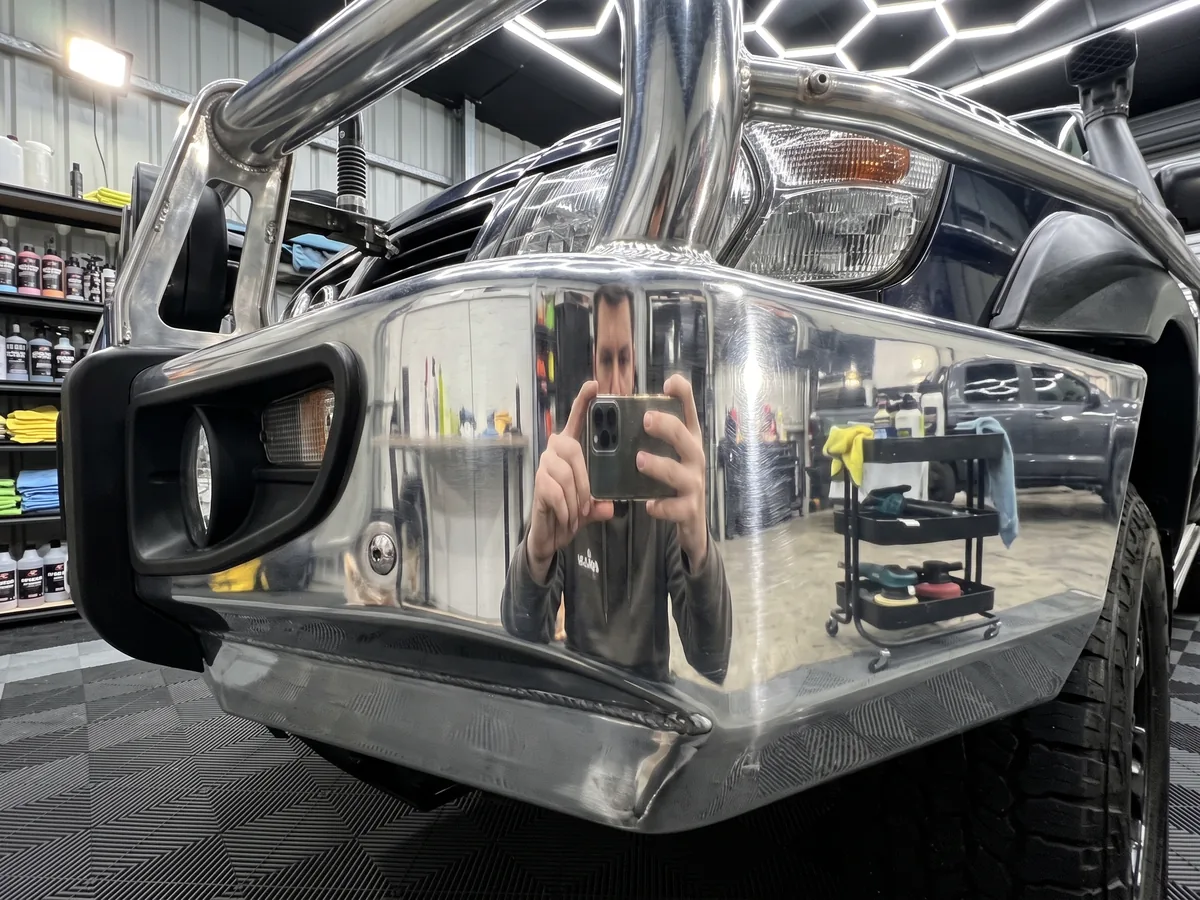
Bare aluminium looks incredible when it's polished and terrible when it isn't. Left alone it oxidises to a flat grey, streaks with water staining and pits in the salt and fertiliser environments common around Central Victoria's farms. Bringing it back is slow, dirty, skilled work — which is exactly why most people put it off.
We polish aluminium on trucks (tanks, bull bars, visors, wheels, tool boxes), alloy boats, trailers, tray bodies, checker plate and alloy wheels. Depending on the finish you want we'll go from a clean, bright satin to a true mirror finish, then seal it so it stays that way far longer than raw metal would.
What's included
- Degrease and chemical pre-clean to remove oxidation and road film
- Sanding of pitted or heavily oxidised areas where a mirror finish is wanted
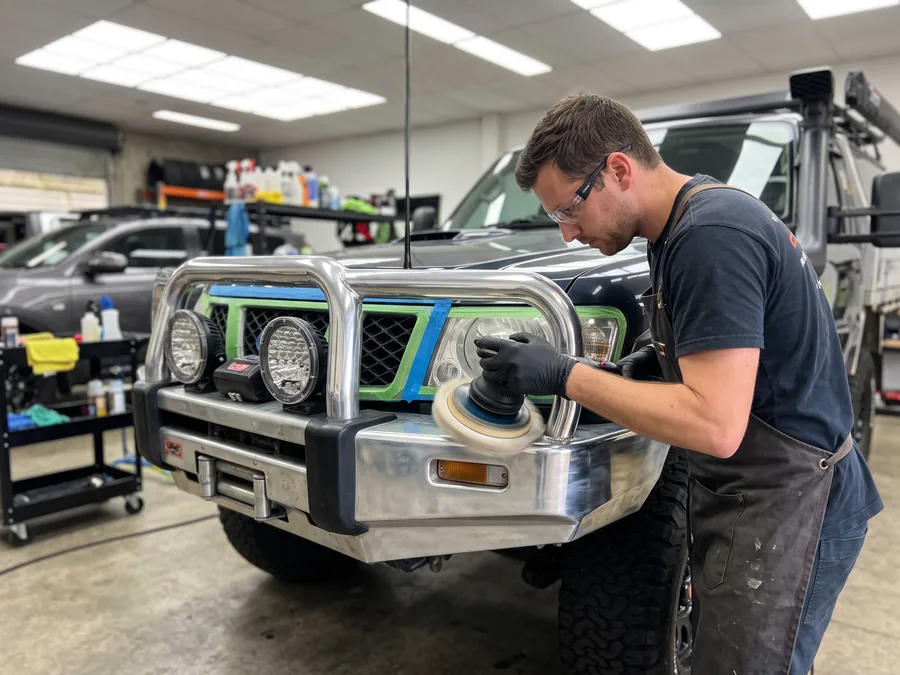
- Multi-stage machine polishing with cutting and finishing compounds
- Residue removal (polished alloy leaves a black residue that must be fully cleaned off)
- Sealant or ceramic coating to slow re-oxidation
- Options: satin brightening (acid clean) for a quick, clean, non-mirror finish
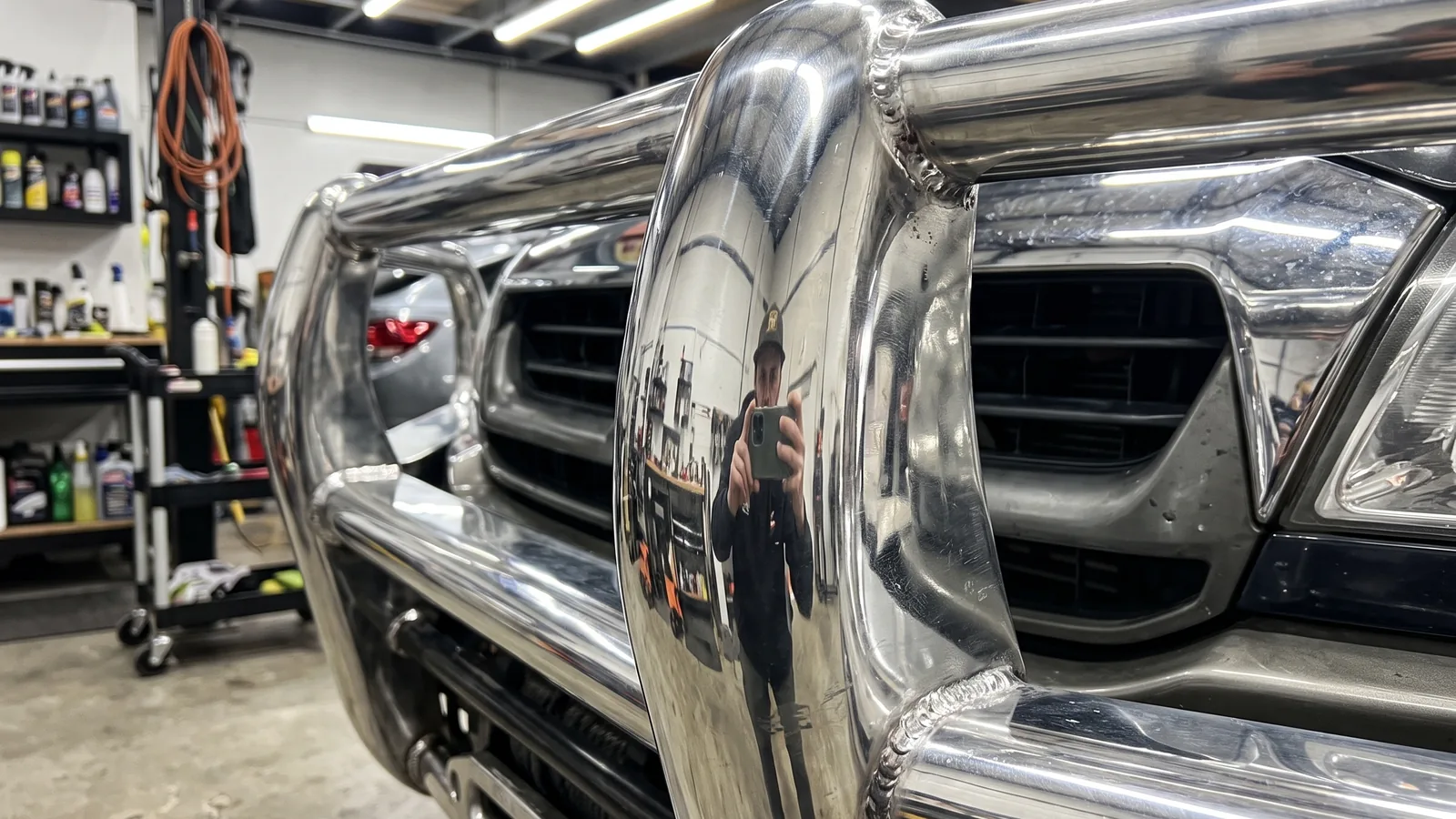
Satin brighten vs mirror polish — picking the right finish
Acid brightening is a chemical clean that strips oxidation and brings alloy back to a clean, even, matte-bright finish. It's fast and cost-effective and is what most truck fleets and tinnie owners want for tanks, wheels and hulls that just need to look clean and uniform.
Mirror polishing is a mechanical process — sanding (if pitted), then progressively finer compounds with sisal, stitched and loose cotton wheels or large machine polishers — until the surface reflects. It takes hours per tank and the result is spectacular. It's the show-truck finish.
Either way, raw aluminium starts oxidising again the moment it's exposed. A metal sealant or ceramic coating slows that dramatically and makes maintenance a wipe rather than a re-polish. Painted or clear-coated alloy is a different job (that's paint correction) — we'll identify what you've got before we quote.
The polishing process
- 01
Degrease & strip
Road grime, old sealant and loose oxidation removed chemically.
- 02
Sand (if needed)
Pitting and heavy oxidation sanded through progressive grits for a mirror finish.
- 03
Cut & colour
Multi-stage compounding to remove sanding marks and bring up reflection.
- 04
Clean & seal
Black polishing residue removed completely, then sealed to slow re-oxidation.
What affects the price
We quote every job individually rather than publishing a one-size price, because these are the things that actually move it:
- Finish required — satin brighten vs full mirror polish
- Surface area (a pair of 500 L tanks is a big day)
- Pitting and whether sanding is required
- Access — tanks on a truck vs loose parts on a bench
Send us the vehicle, suburb and a photo or two and we'll give you a fixed price — no obligation.
Good for
- Truck fuel tanks, bull bars, visors, steps and alloy wheels
- Alloy boats, trailers and tray bodies
- Checker plate on utes and caravans
- Show trucks and restored classics
From the studio
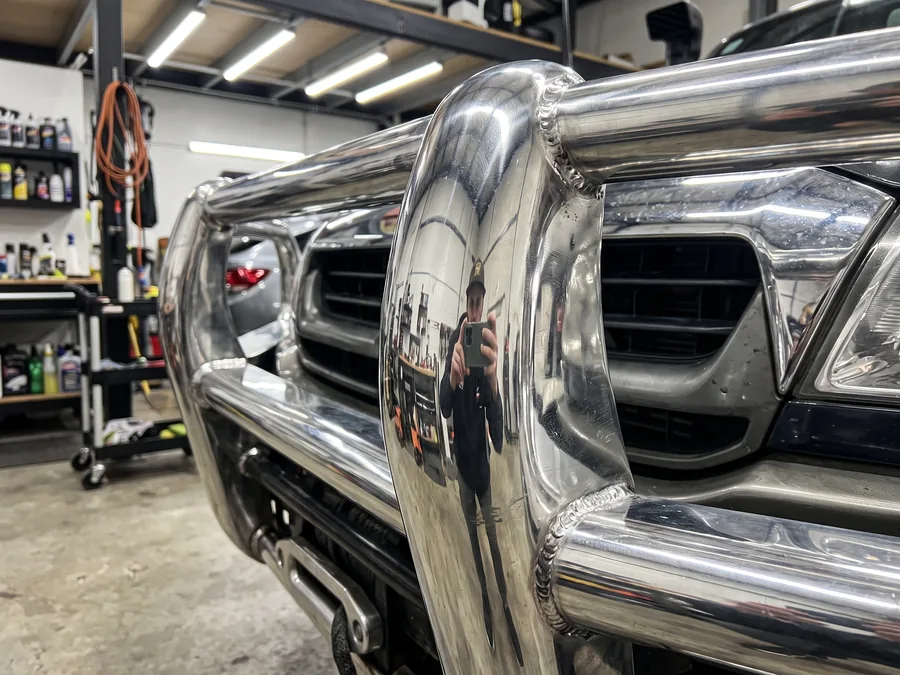
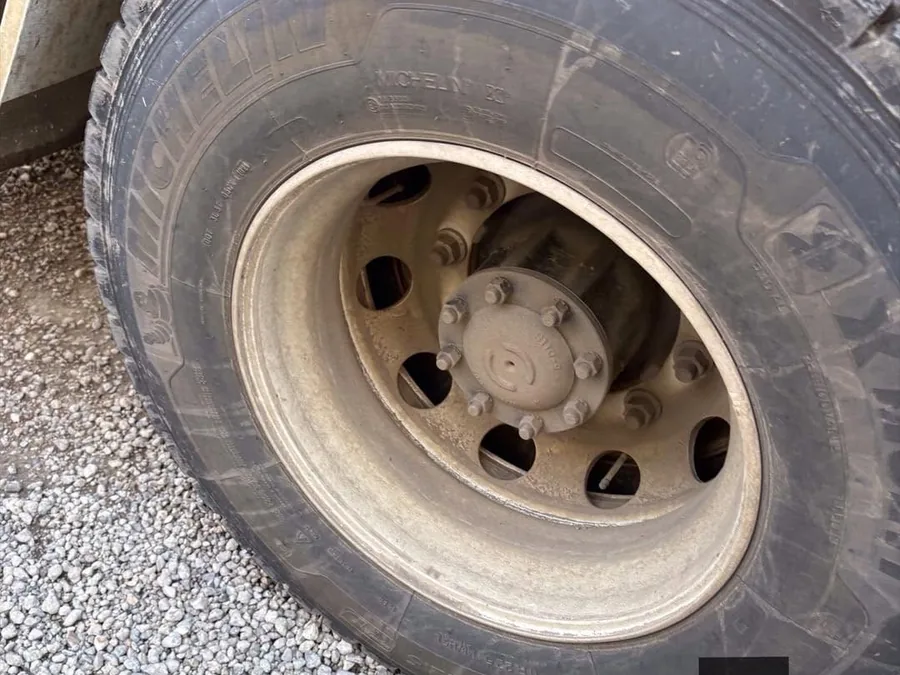
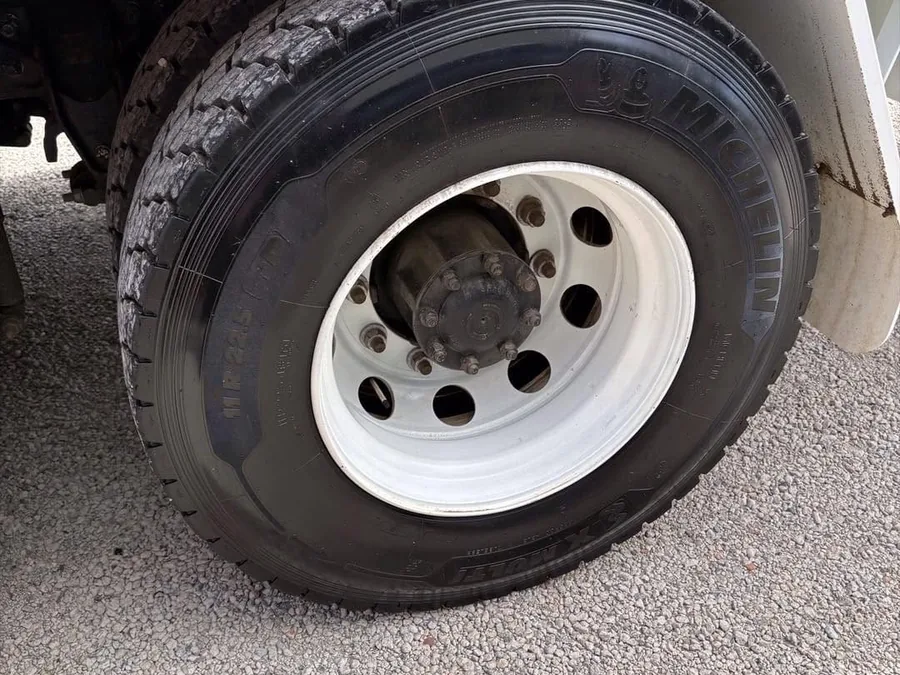
Aluminium Polishing questions
Can you polish pitted aluminium to a mirror finish?
Usually, with sanding first. Very deep pitting can't be completely removed without taking off too much material, but it can be dramatically improved. We'll assess before quoting.
How long does polished aluminium stay shiny?
Sealed with a metal sealant or ceramic coating and wiped down regularly, months. Left bare and exposed to weather, it begins to dull within weeks. Protection is well worth it.
Do you polish tanks on the truck or off it?
Either. Bring the truck to Spring Gully, or drop loose parts (tanks, bars, wheels, tool boxes) in for bench polishing. For fleets we can arrange to work at your depot.
Is acid brightening safe?
In trained hands and with the right neutralising, yes. It's the standard method for fleet truck tanks and tinnies. We protect surrounding paint, glass and rubber.