
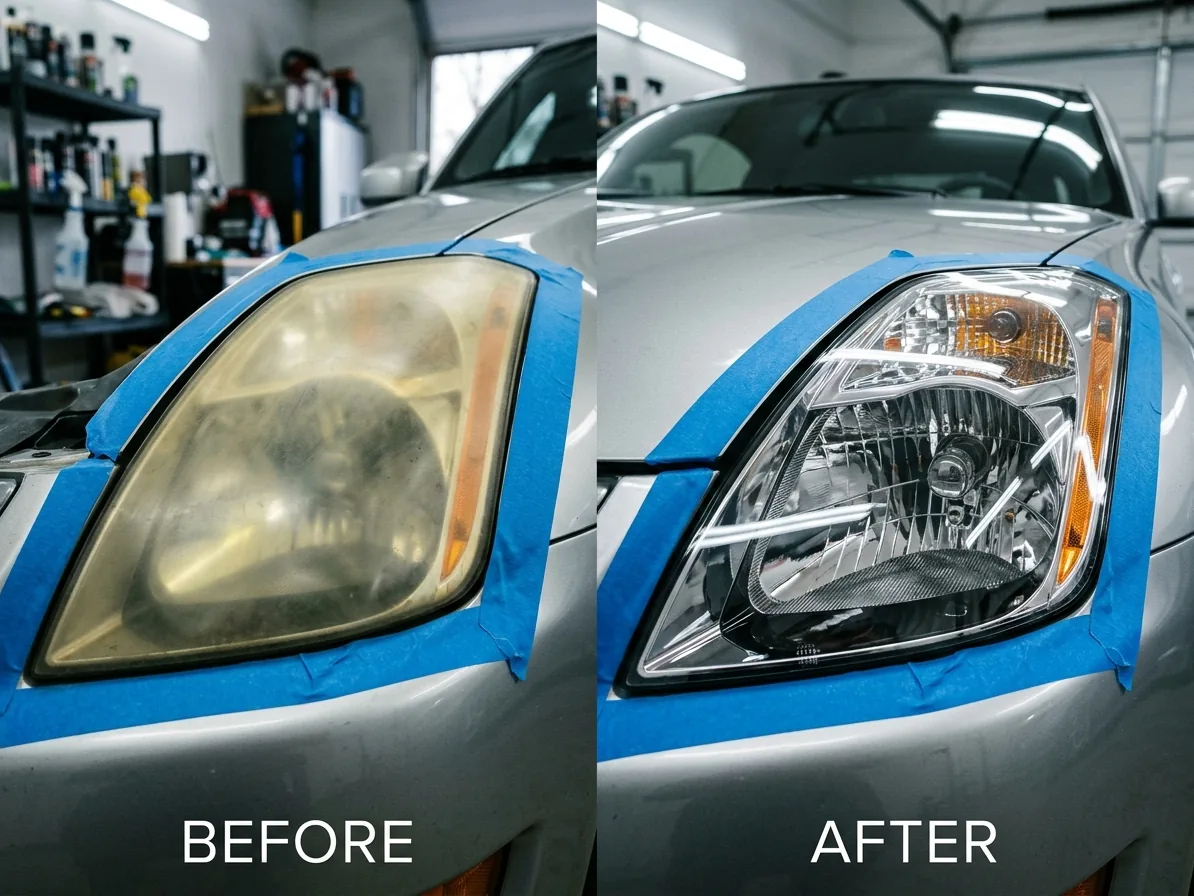
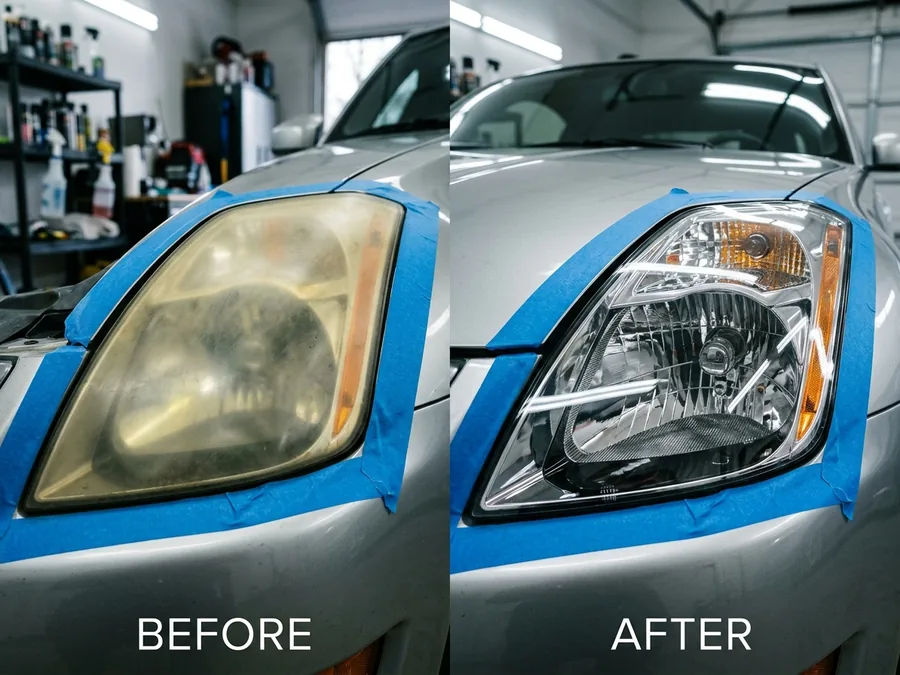
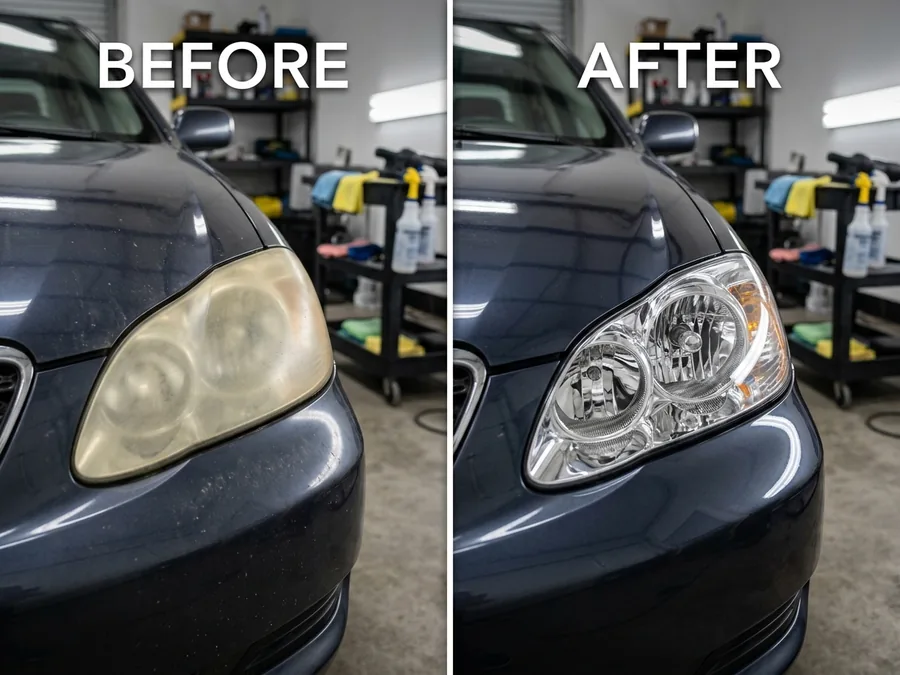
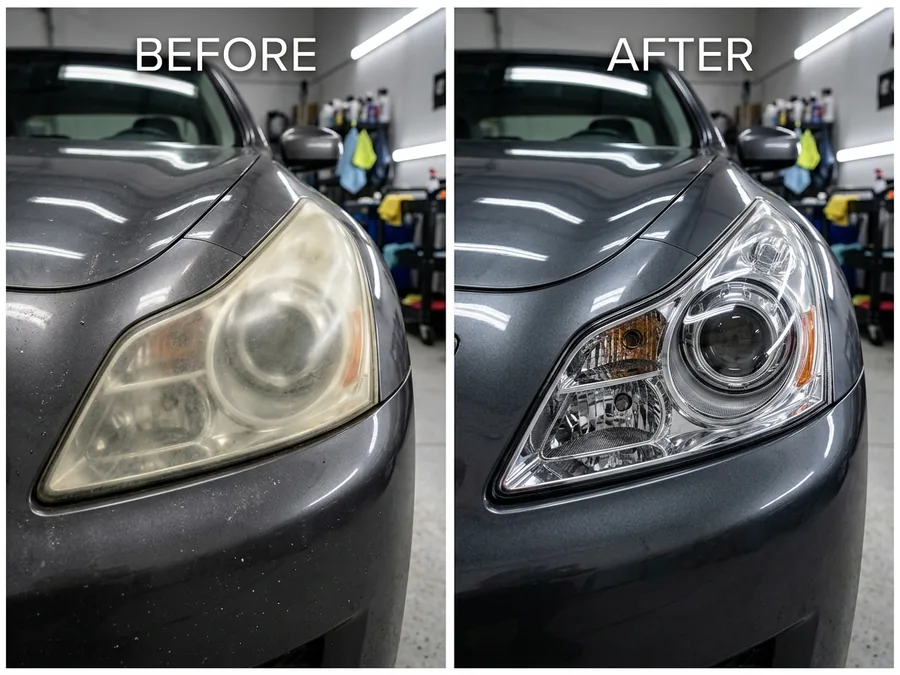
Modern headlights are polycarbonate with a thin factory UV coating. Bendigo's sun eats that coating in a few years, and once it's gone the plastic oxidises, yellows and goes cloudy. Light output drops dramatically (a badly hazed lens can cut usable light by well over half), the car looks tired, and in bad cases it fails a roadworthy.
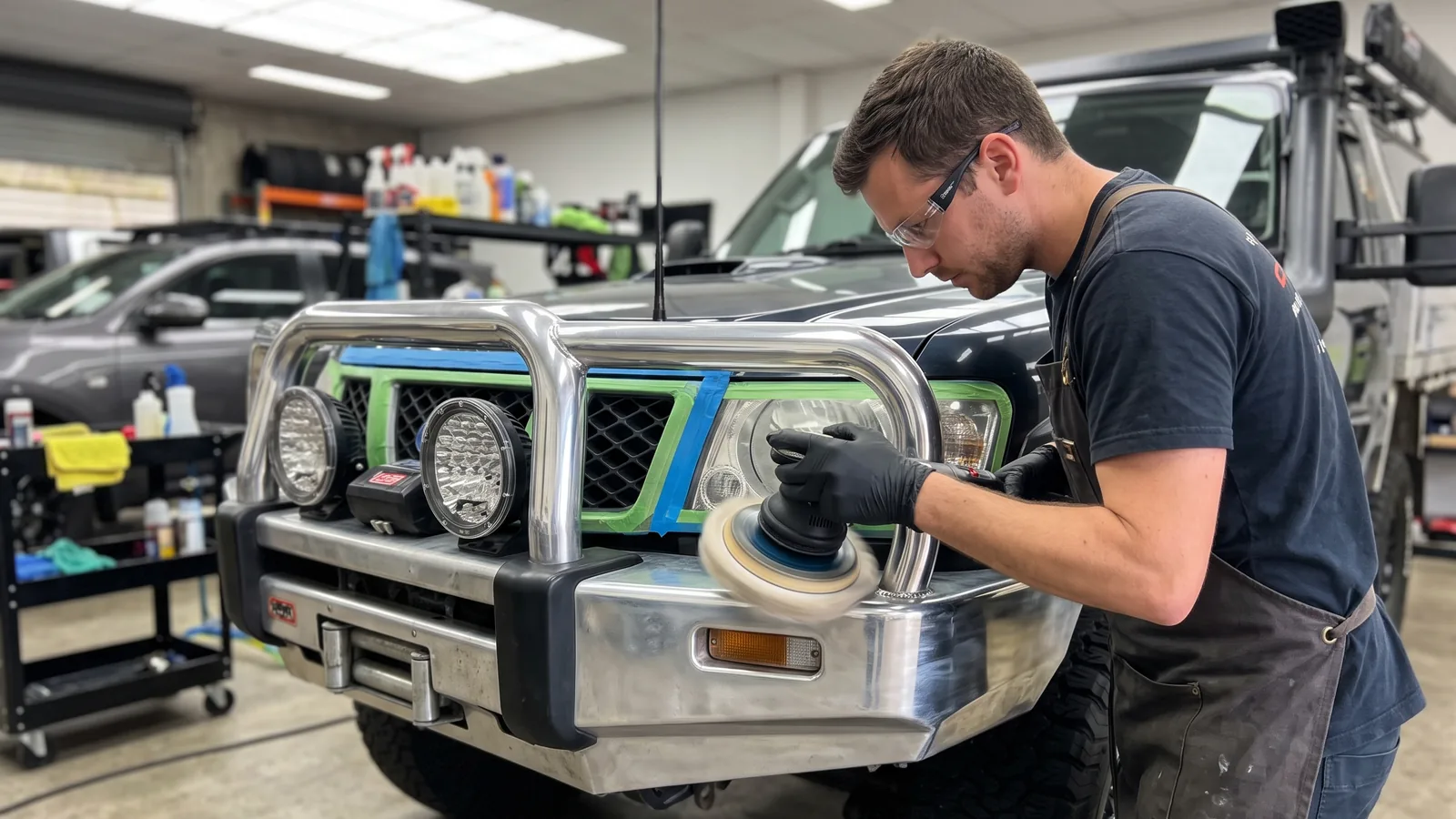
We restore headlights properly: progressively wet-sanding away the oxidised layer, machine polishing the lens back to optical clarity and — crucially — applying a durable UV-resistant coating so it doesn't yellow again in six months like the supermarket kits do.
What's included
- Lens cleaning and masking of surrounding paint
- Progressive wet sanding to remove the oxidised layer (only as far as needed)
- Machine compounding and polishing to restore clarity
- UV-protective ceramic or clear coating applied for long-term protection
- Tail lights, indicators and fog lights restored on request
Why most headlight kits fail within months
DIY kits and quick-fix 'headlight wipes' polish off the oxidation and leave the raw polycarbonate exposed with, at best, a thin wax that washes off. Without a real UV barrier, the lens starts yellowing again almost immediately — often worse than before, because the factory coating is now completely gone.
The restoration itself isn't the hard part; it's the sealing. We finish every lens with a UV-resistant coating designed for polycarbonate, which is what gives you years of clarity rather than months. It's also why we recommend doing it once properly instead of three times cheaply.
We'll be honest about limits too. Some lenses have crazing or moisture on the inside, or have been damaged by previous aggressive sanding. We'll tell you before we start if a lens is beyond restoring and replacement is the better spend.
The restoration process
- 01
Assess
We check whether the haze is external oxidation (fixable) or internal (not), and mask the paintwork.
- 02
Sand
Progressive wet sanding through finer grits removes the yellowed layer.
- 03
Polish
Machine compounding and finishing brings the lens back to clear.
- 04
Seal
UV-protective coating applied and cured so the result lasts.
What affects the price
We quote every job individually rather than publishing a one-size price, because these are the things that actually move it:
- Severity of oxidation and whether previous DIY attempts have damaged the lens
- Lens size (large SUV/ute lenses vs small hatch lenses)
- Adding tail lights, fog lights or indicators
- Bundling with a detail or ceramic coating (cheaper together)
Send us the vehicle, suburb and a photo or two and we'll give you a fixed price — no obligation.
Good for
- Pre-roadworthy and pre-sale
- Any car 5+ years old that lives outside
- Improving night driving on country roads
- Trucks, caravans and boats with faded plastic lenses
From the studio
Headlight Restoration questions
How long does headlight restoration last?
With our UV coating, years rather than months. Keeping the lenses washed and occasionally topping up with a ceramic spray extends that further.
Can hazy headlights fail a roadworthy in Victoria?
Yes — deteriorated or discoloured lenses that reduce light output can be a roadworthy defect. Restoration is far cheaper than replacement lenses.
How long does it take?
Around 45–90 minutes for a pair depending on condition. Easily combined with a detail.
Will it work if the moisture is inside the headlight?
No. Internal fogging or crazing means the seal or the inner surface is the problem and the headlight needs to come out or be replaced. We'll tell you before starting.