
Why gelcoat chalks
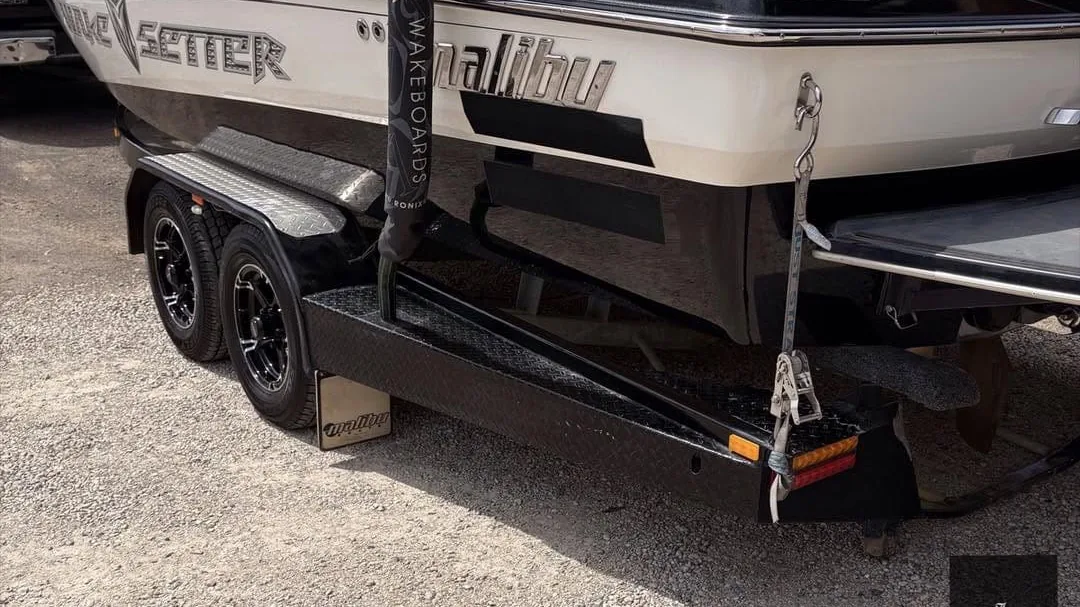
Gelcoat is a pigmented polyester resin, far thicker and softer than car paint. UV breaks down the resin at the surface, leaving the pigment and filler exposed as a fine chalk. It looks flat, feels rough and rubs off white on your hand. A season on the trailer in a Bendigo backyard is plenty to start it.
Bringing it back
The chalked layer is removed by compounding — heavier cut and wool pads than any car would see — then refined with a finishing polish so the surface doesn't haze. Heavy oxidation can take multiple passes. Very old gelcoat that's been chalking for a decade may not reach a mirror finish without professional refinishing, but the improvement is dramatic every time. Car products won't do it; they're far too mild.
Keeping it that way
Freshly polished gelcoat is clean but still porous, and it will chalk again. Seal it — ideally with a marine-grade ceramic coating. On a boat, the coating stops water-line staining and algae gripping, slows UV chalking and turns the post-Eppalock clean-up into a rinse. Cover the boat when it's parked, and give it a rinse after every trip. Do that and next October it comes out of the cover looking like it went in.
Want this done properly?
Oxidation removal and polishing for fibreglass and gelcoat, aluminium hull brightening, vinyl and upholstery care, and marine ceramic coatings — bring it on the trailer to our Spring Gully studio.
Boat Detailing in Bendigo