
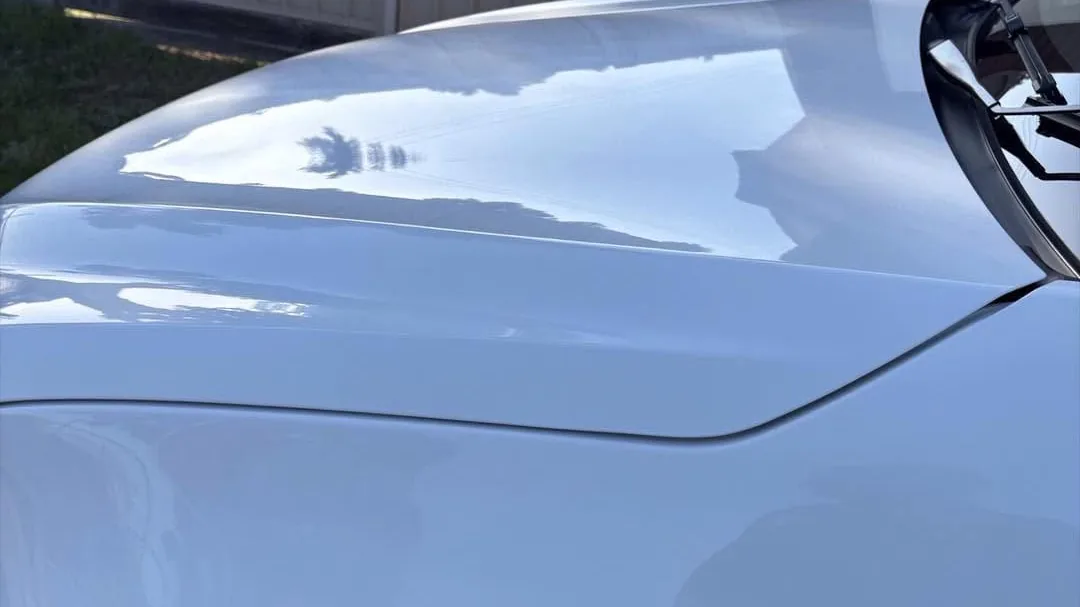
What a water spot is
Tank, dam and bore water carries dissolved minerals — calcium, magnesium, sometimes iron. When a droplet evaporates, the minerals stay behind as a ring. On a hot Bendigo afternoon that happens in minutes. Stage one is a surface deposit you can wash or chemically dissolve. Stage two, if the deposit sits in the sun for days, is etching: the alkaline minerals react with the clear coat and leave a crater-like mark that's physically in the paint.
Removing them
Fresh spots respond to a dedicated water-spot remover (mildly acidic) applied to a cool panel, worked gently and rinsed. Vinegar diluted in water does a passable job in a pinch, but keep it off trim and rinse thoroughly.
Etched spots won't dissolve because the deposit is gone — the mark is a depression in the clear coat. The only fix is machine polishing to level the surface. Light etching comes out with a finishing polish; heavy etching needs a compound. It's one of the most common things we correct before ceramic coating around here.
Preventing them
Wash early morning or evening, in the shade, and dry the car with a blower or plush drying towel before the water evaporates. Never let a rinsed car air-dry in the sun. If you can, do the final rinse with filtered or rain water. And protect the paint: a ceramic coating is highly resistant to mineral etching — spots sit on the coating and wipe off instead of biting into the clear coat. Graphene coatings like Envoke Pro Coat+ are specifically engineered for better water-spot resistance than conventional ceramics, which is one reason we use them here
Want this done properly?
Single and multi-stage machine polishing to remove swirl marks, scratches, oxidation, water spots and holograms — the foundation for every great coating.
Paint Correction in Bendigo